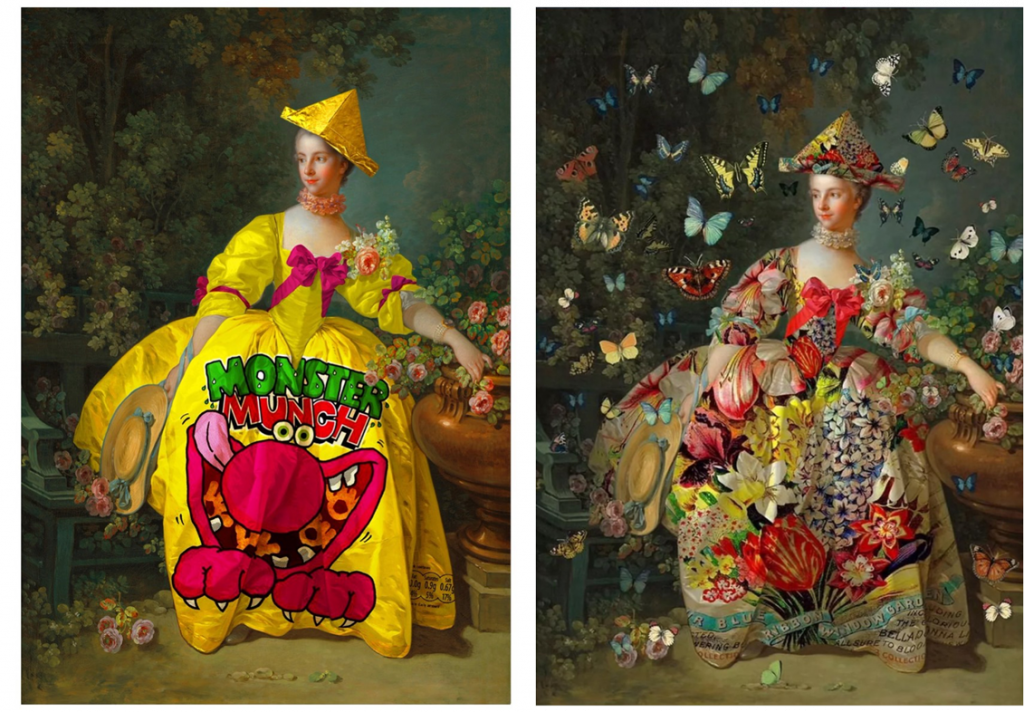
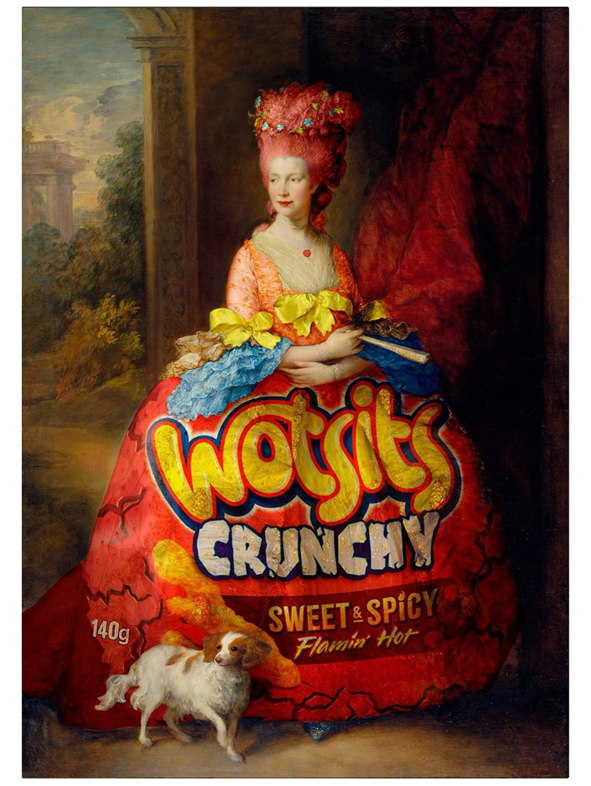
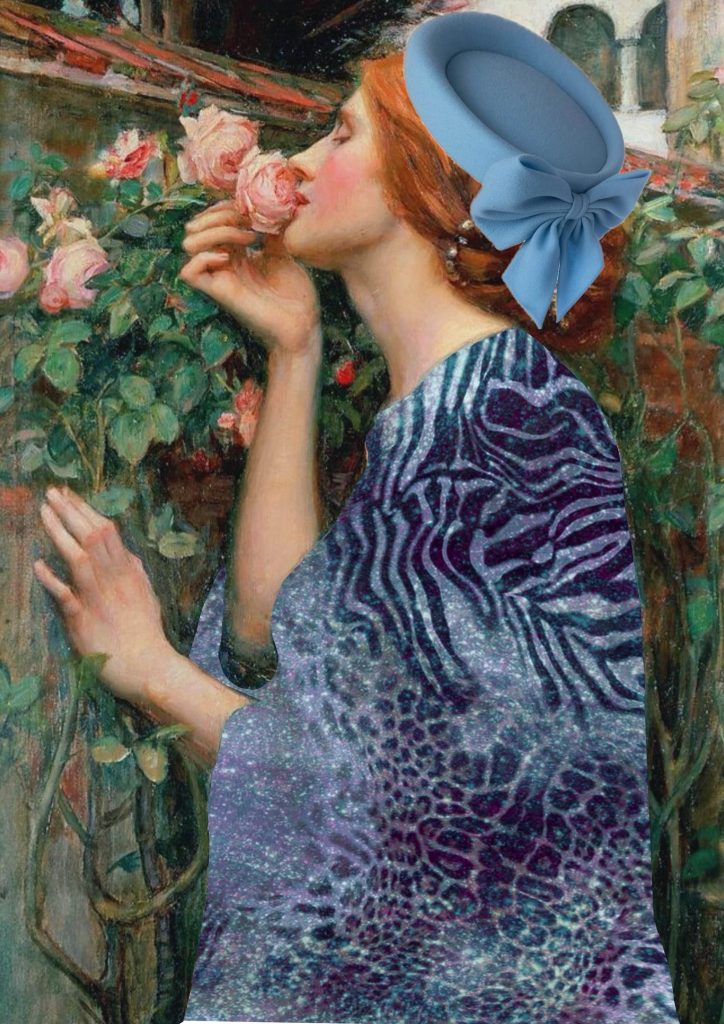
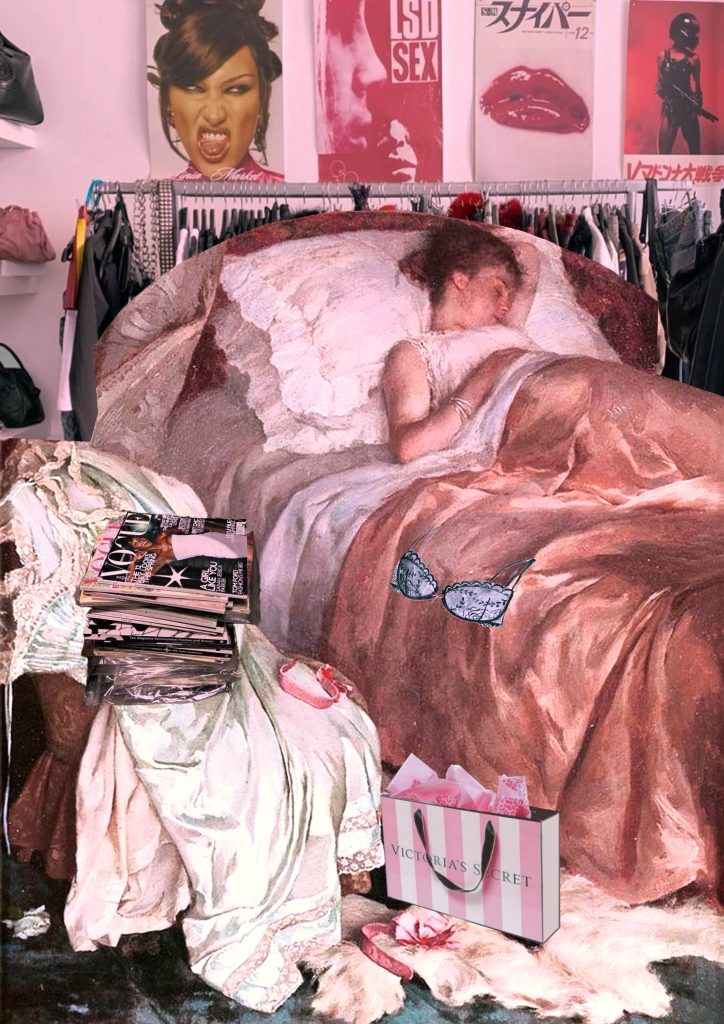
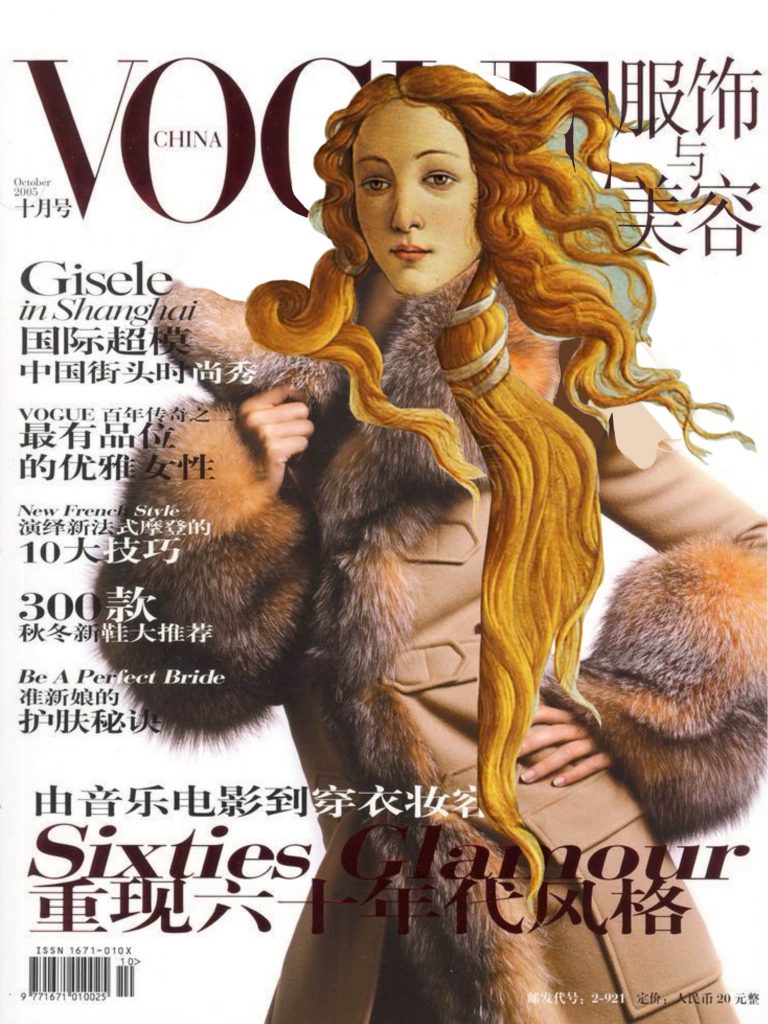
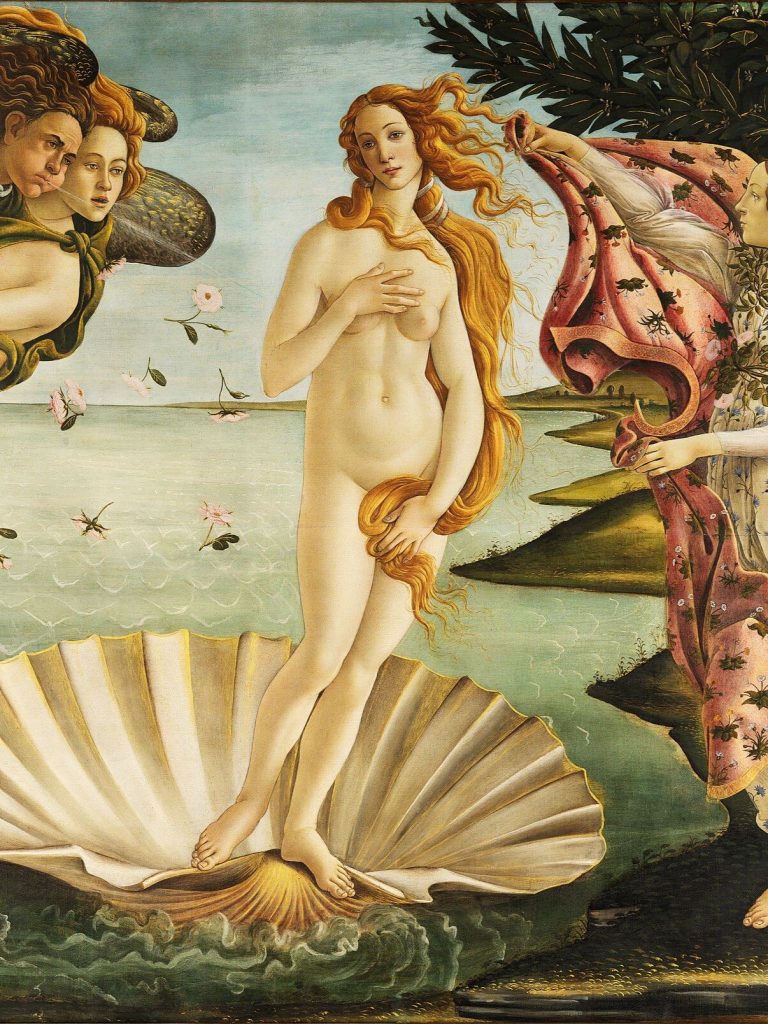
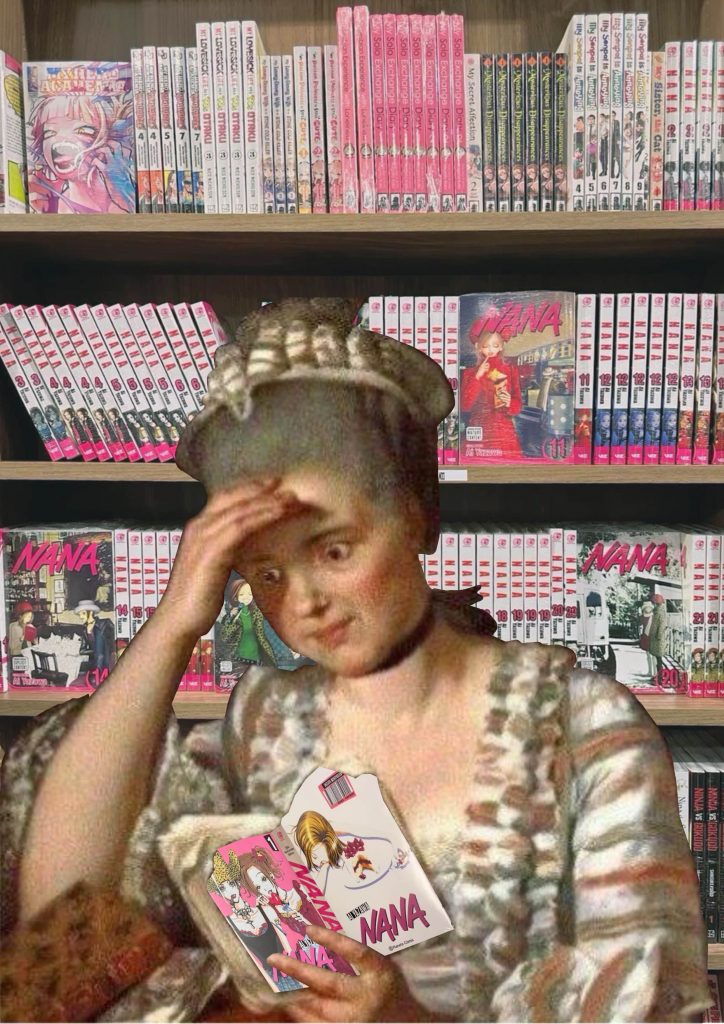
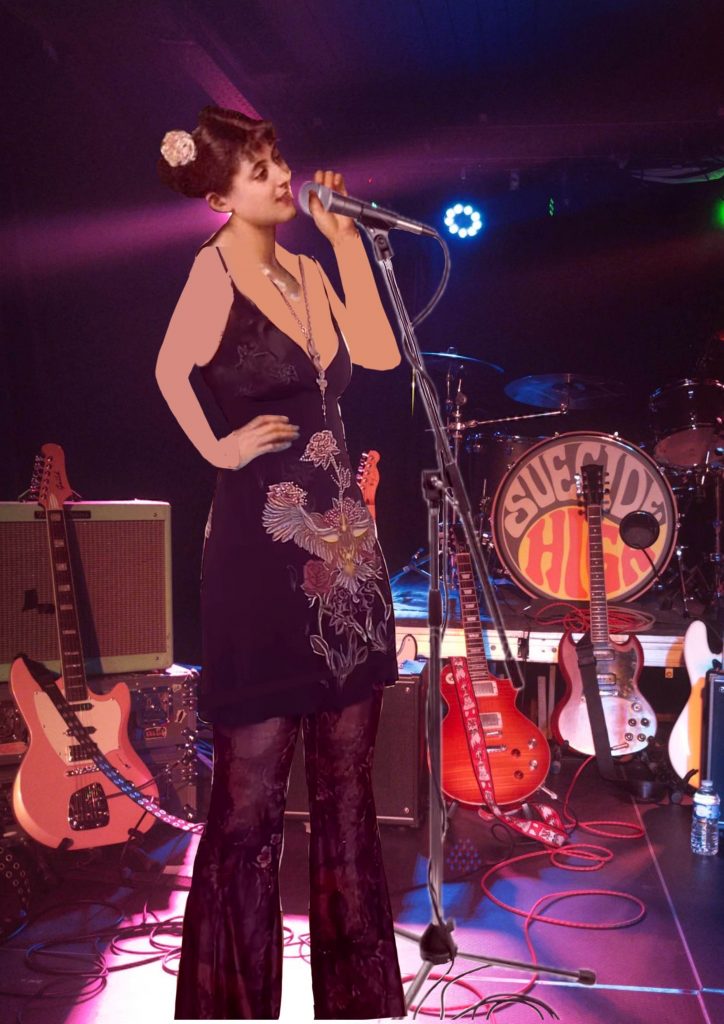
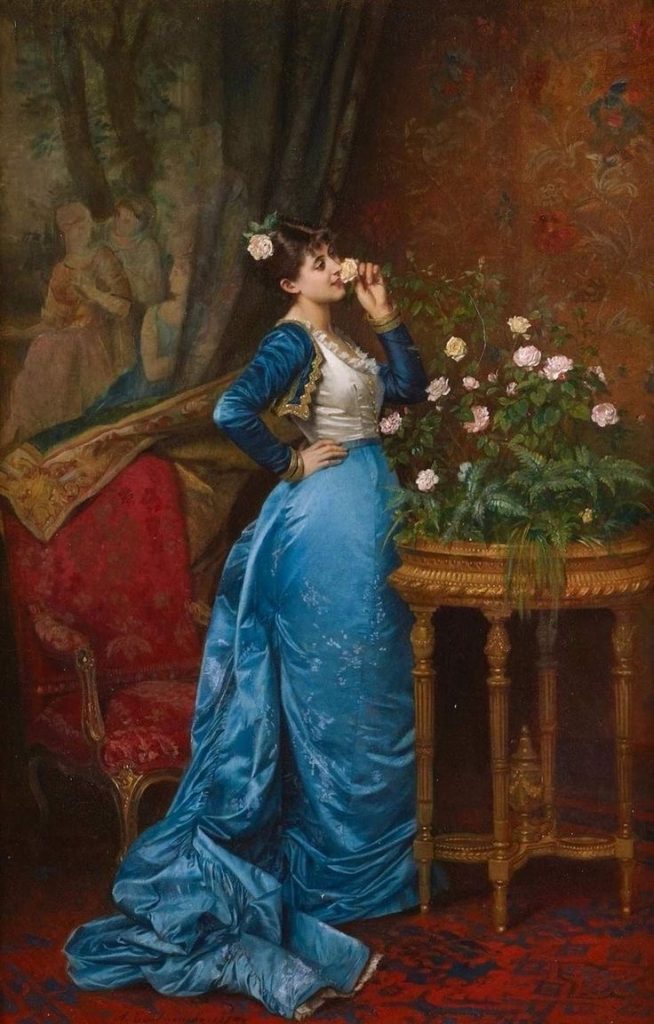
Artist like Toby Holmes inspired me by his ‘Pop-Surrealist’ pieces combining images drawn from classical art to vintage packaging. The mixing of old and new reflects on the functions of fashion, portraiture & advertising.
London-based artist and designer Toby Holmes of Little Fish Design, explores the connection between Art and Advertising by digitally melding classic painted portraits with snack packaging. Titled The Product Placement Project, the ongoing series of digitally created art prints explores the connection between Art and Advertising. Formal portraits by such artists as Velázquez, Goya, Watteau, Boucher and Fragonard become humorous when the lush gowns are made from bubble gum wrappers and biscuit packaging as opposed to stiff silks and satins. Adding to the surrealness, the heads and wigs of the subjects are topped off with fun little hats.
He creates playful & humorous ‘Pop-Surrealist’ pieces combining images drawn from classical art to vintage packaging. This current series of limited edition prints entitled ‘The Product Placement Project’ creates a cheeky juxtaposition between old & new, Classical & Pop, giving classical portraiture a humorous populist twist. It could be said to reflect on the functions of fashion, portraiture & advertising (but tha t would be hugely pretentious) …they’re mostly meant to amuse..
Many artworks show how women were forced into unfair situations and how they resisted. These works show women’s anger, fear, and resistance, reminding us that gender inequality has long been a source of frustration and art can make us feel that anger too.
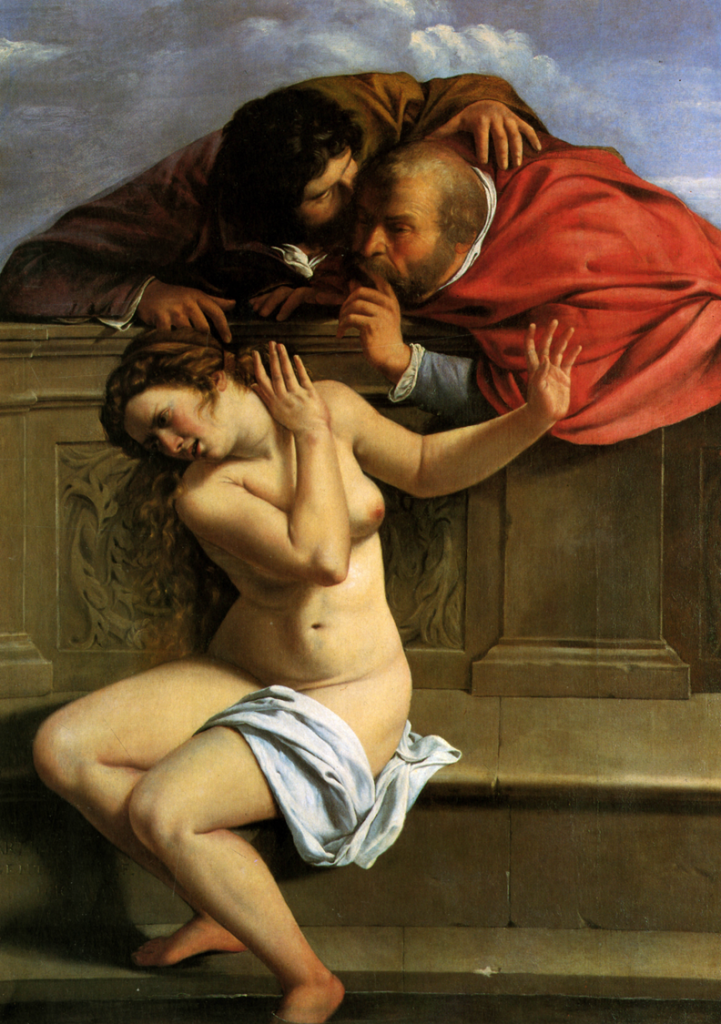
Susanna and the Elders (1610) by Artemisia Gentileschi
The piece is seen as revolutionary for giving emotional realism to a woman enduring coercion. This it is one of the first artworks to depict the biblical story of Susanna from a woman’s perspective, exposing the emotional reality of sexual harassment rather than eroticizing it. Painted when she was only seventeen, Gentileschi portrays Susanna recoiling in fear and revulsion, rejecting the traditional male gaze that had long shaped this scene. Her emotionally honest portrayal transforms a familiar narrative into a powerful commentary on coercion, vulnerability, and resistance, making the painting a ground breaking early statement about women’s lived experiences and the psychological impact of male predation.
Painted when Artemisia was only 17 years old which was her earliest known work.
Depicts the biblical story where two elders try to coerce Susanna into sex while she bathes.
Most male painters portrayed Susanna as flirtatious or passive; Artemisia instead shows a woman visibly recoiling, twisting her body away in disgust and fear.
This reading highlights female experience of harassment, not male fantasy.
The painting is often interpreted through Artemisia’s biography, shortly after this period she was raped by painter Agostino Tassi and forced through a humiliating public trial.
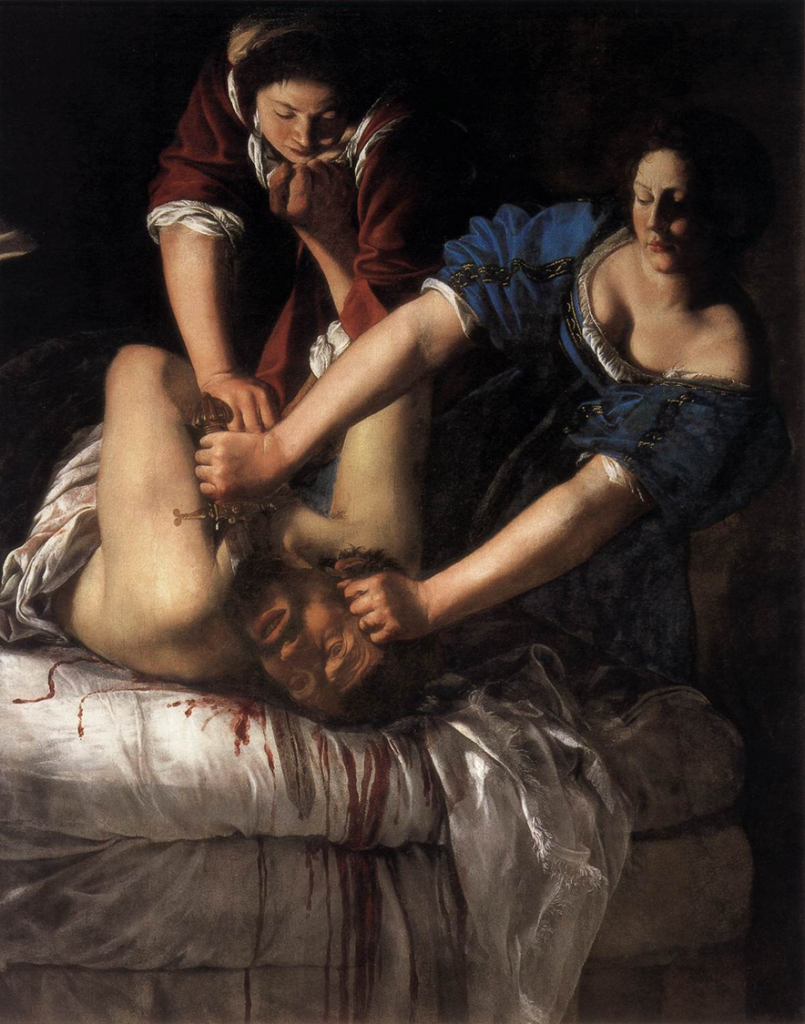
Judith Slaying Holofernes (1612–13, 1620) by Artemisia Gentileschi
Judith Slaying Holofernes matters because it stands as one of the most powerful visual declarations of female strength and righteous anger in Western art. Unlike previous depictions of the story, Gentileschi shows Judith and her maid using intense physical force and unwavering determination, shifting the narrative from seduction or moral allegory to one of female agency and solidarity. Created in the aftermath of Gentileschi’s own trauma and public trial, the painting resonates as both a personal reclaiming of power and a broader challenge to patriarchal expectations of women’s passivity. Its dramatic realism, emotional depth, and refusal to soften female aggression make it a landmark work in both Baroque art and feminist interpretation.
Based on the biblical story of Judith, who assassinated the Assyrian general Holofernes to save her people.
Artemisia’s rendering is far more violent and physical than earlier versions which Judith and her maid use their full strength, and the blood realistically spurts.
Often interpreted as an expression of Artemisia’s fury, trauma, and reclaiming of power, given her assault and the trial.
Shows women not as passive beauties but as active, forceful agents.
Her technique, Caravaggesque realism, dramatic lighting that heightens the violence and emotional intensity.
This is considered one of the most powerful visual representations of female vengeance and agency in art history.
Notes:Judith killed Holofernes because:
He was the commander of an army about to destroy her people.
Surrender meant death, rape, and slavery.
No one else had the courage or plan to stop him.
Killing him was the only way to end the siege and save her community.
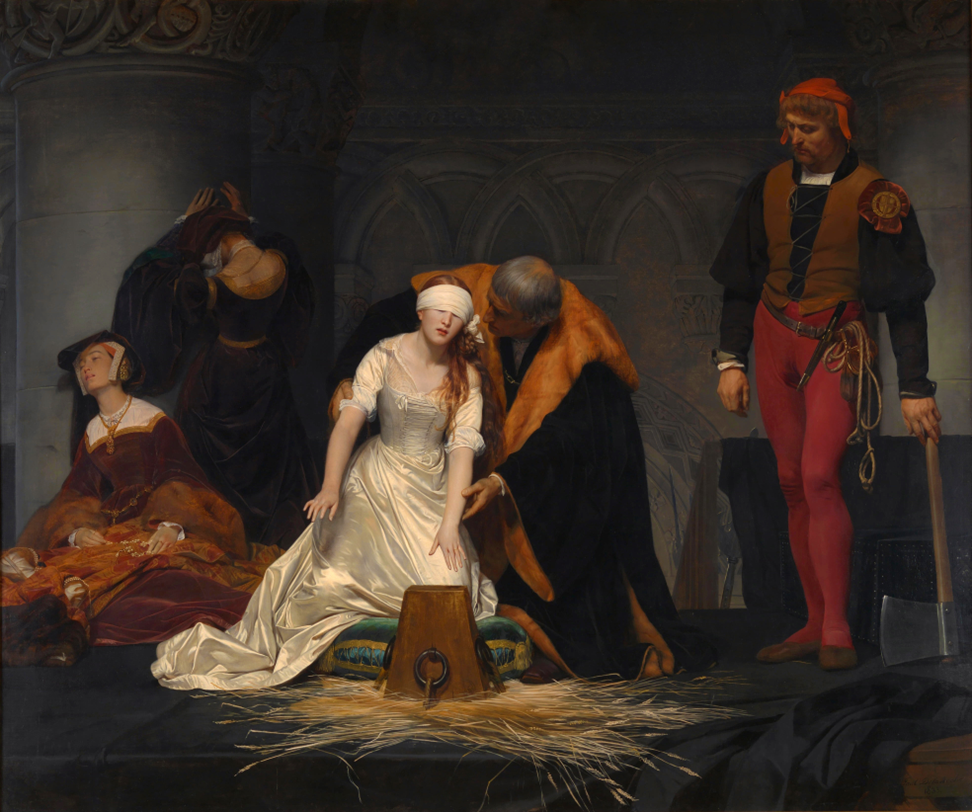
The Execution of Lady Jane Grey (1833) by Paul Delaroche
This captures the emotional tragedy of a young woman sacrificed to political ambition. Delaroche dramatizes her innocence and vulnerability by portraying her in luminous white garments and guiding her blindly toward the execution block, transforming her historically complex story into a universally resonant image of victimhood under ruthless power structures. The painting deeply influenced public perception of Lady Jane Grey, shaping her legacy as a symbol of purity destroyed by political manipulation. Through its theatrical poignancy and meticulous detail, it raises enduring questions about how societies memorialize female suffering and how political brutality collapses onto the bodies of young women.
•Depicts the tragic death of Lady Jane Grey, the 16-year-old “Nine Days’ Queen” of England.
•She was executed in 1554 after being used as a political pawn in a power struggle for the throne.
•Delaroche dramatizes her innocence by dressing her in pure white and showing her being guided blindly to the block.
•The painting reflects Victorian fascination with tragic female figures, often portrayed as victims of political cruelty.
•Though not historically accurate in detail, the painting became one of the most emotionally powerful images in 19th-century art.
•It highlights themes of female vulnerability, manipulation, and the brutality of political ambition.
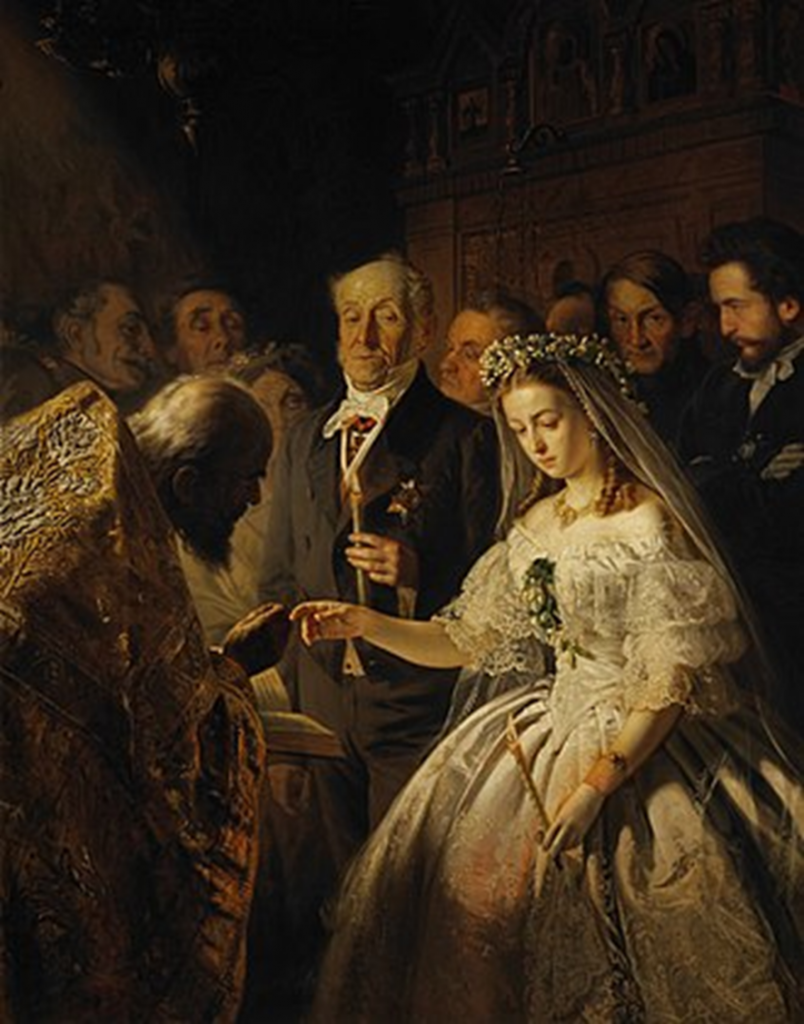
The Unequal Marriage (1862)byVasili Pukirev
This exposes the emotional and social injustice embedded in 19th-century arranged marriages. By portraying a devastated young bride forced to wed an older, wealthier man, Pukirev reveals the lack of agency women faced and critiques a system that treated marriage as a transaction rather than a partnership. The indifference of the priest and guests highlights the social complicity that allowed such practices to thrive, while Pukirev’s own presence in the painting adds personal sincerity to the protest. The work stands as a powerful piece of social commentary, challenging the norms that constrained women’s lives and autonomy.
Shows a young bride being forced to marry a much older man, likely for financial or social reasons.
The bride’s expression is devastated, emphasizing reluctance, loss of agency, and social pressure.
The groom stands smugly; the priest and onlookers seem complicit or indifferent.
Pukirev included himself in the scene (the man directly behind the bride), suggesting he had personal sympathy—or personal experience—with such an unjust union.
Considered a bold critique of arranged marriages and the treatment of women in 19th-century Russia.
The painting resonated strongly with viewers who recognized the practice of coercive marriages.
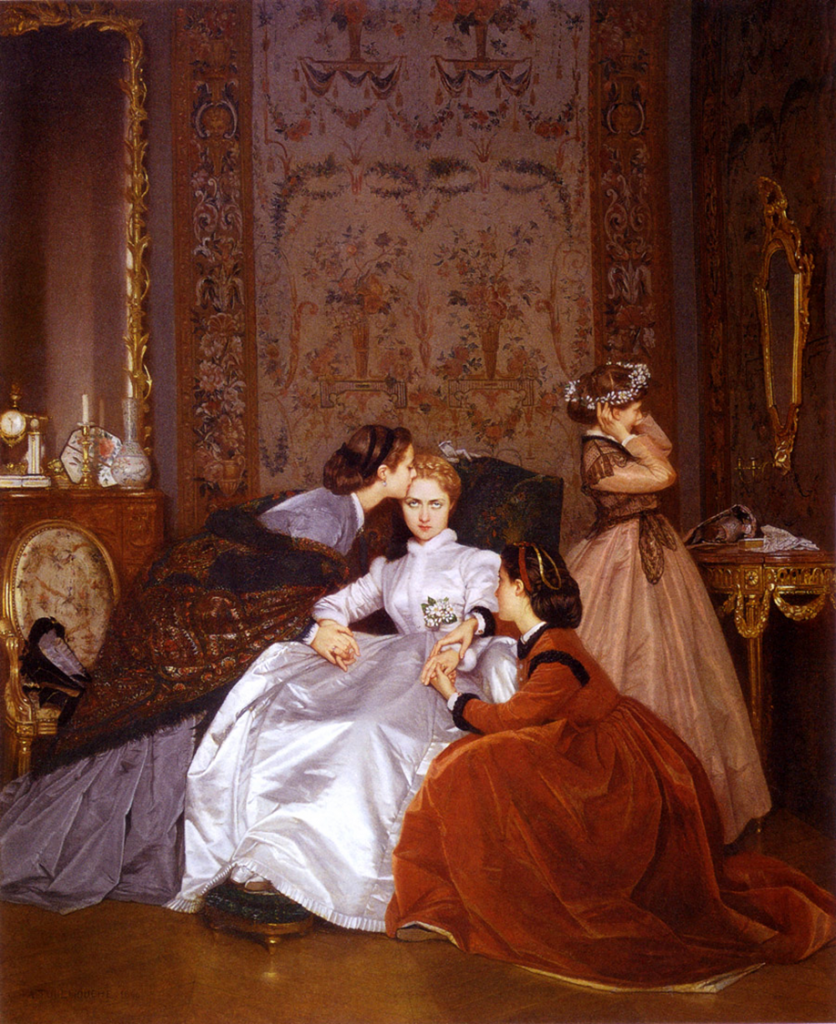
The Reluctant Bride (1866)by Auguste Toulmouche
The Reluctant Bride visualizes a woman’s agency in the form of refusal, challenging the romanticized narrative of marriage by revealing the pressure and inequality embedded in domestic expectations. In a period when female obedience was the norm, this painting quietly foregrounds women’s emotional autonomy and the reality of patriarchal control.
The painting depicts a young woman being led to her wedding ceremony against her will.
It belongs to a broader 19th-century European genre tradition that showcased domestic or moral scenes, often sentimentally or critically.
The bride’s expression—fear, resignation, or anger—contrasts with the cheerful family members around her.
The theme reflects arranged marriages, social expectations, and women’s limited autonomy in the era.
Though variations exist, the composition typically emphasizes the emotional violence of coercion.
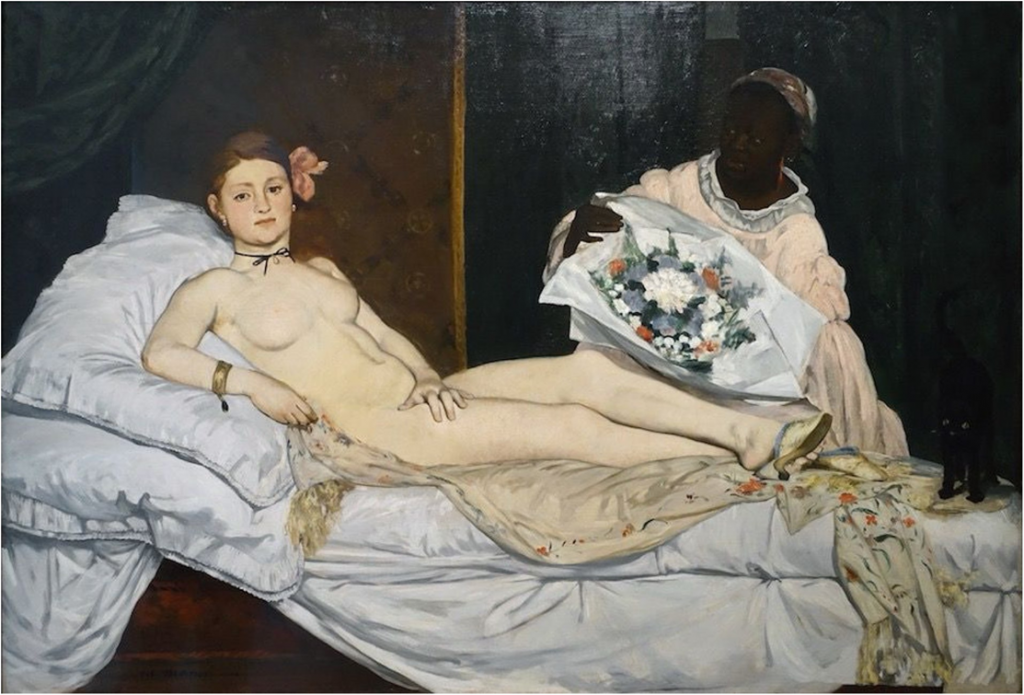
Olympia (1863) by Édouard Manet
Olympia shows female empowerment by: Depicting a woman in control of her own body and sexuality. Rejecting the male fantasy of the submissive nude. Challenging artistic traditions that objectified women. Exposing the power dynamics of gender, race, and class.
Direct gaze: Olympia looks confidently at the viewer, asserting control instead of passive submission.
Self-possession: Her body language shows autonomy — she covers herself on her own terms, symbolizing ownership of her body.
Real woman, not idealized myth: Breaks from tradition by depicting a modern, realistic woman rather than a goddess or fantasy figure.
Challenge to the male gaze: Refuses to please or seduce the viewer; she’s aware of being looked at and resists objectification.
Power and agency: Portrays a woman with sexual and social independence, confronting societal norms.
Contrast to traditional nudes (e.g., Venus of Urbino): Subverts the idea of the passive, idealized female nude in art history.
Inclusion of the Black maid: Highlights issues of race, class, and gender hierarchy — opening discussion on intersectional oppression.
Artistic rebellion: Manet defies academic standards, sparking debates about women’s representation and autonomy.
Feminist legacy: Later feminist scholars (like Linda Nochlin, Griselda Pollock) viewed Olympia as a turning point for portraying women as subjects, not objects.
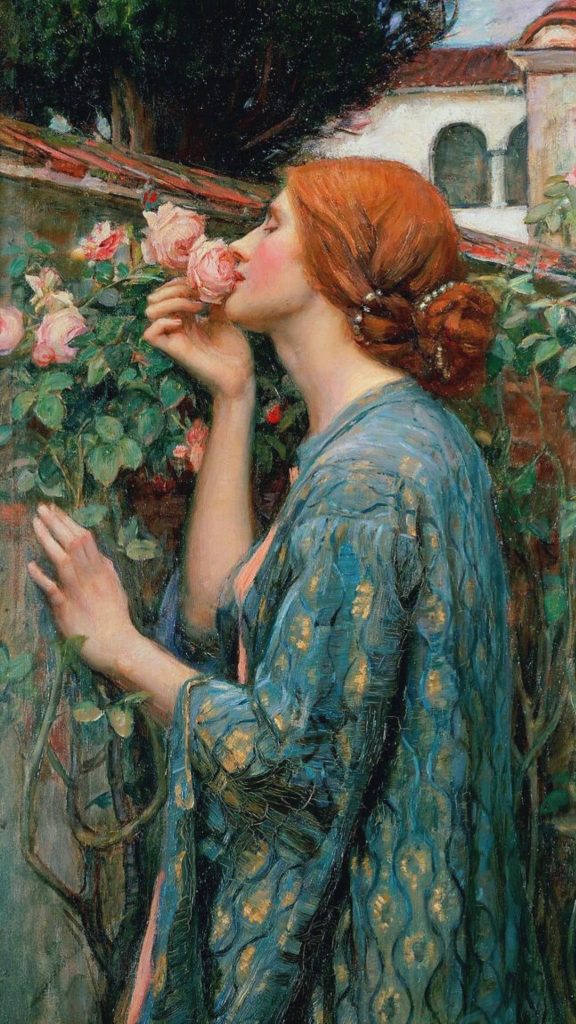
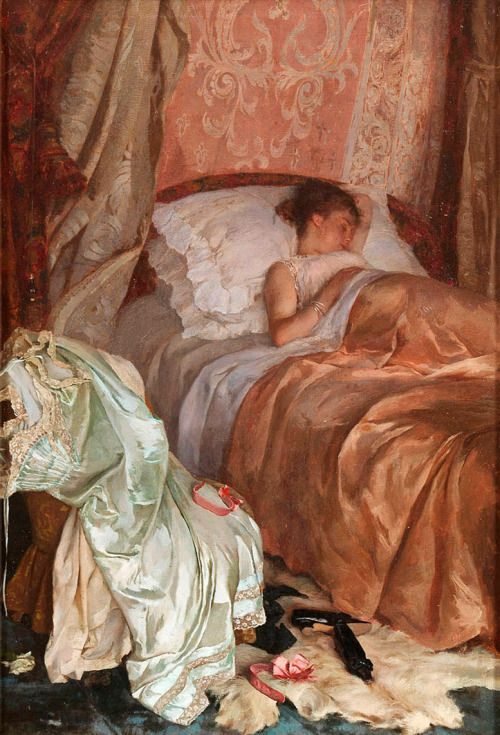
At the beginning, I created collages by mixing and matching figures from old oil paintings with images from modern fashion magazines. I wanted to imagine what these women would wear if they lived in today’s society, and use fashion as a way to explore female empowerment, identity, and agency. By placing historical women in contemporary styles, I aim to challenge traditional representations and highlight how women’s strength and individuality can be expressed through both clothing and self-presentation.